
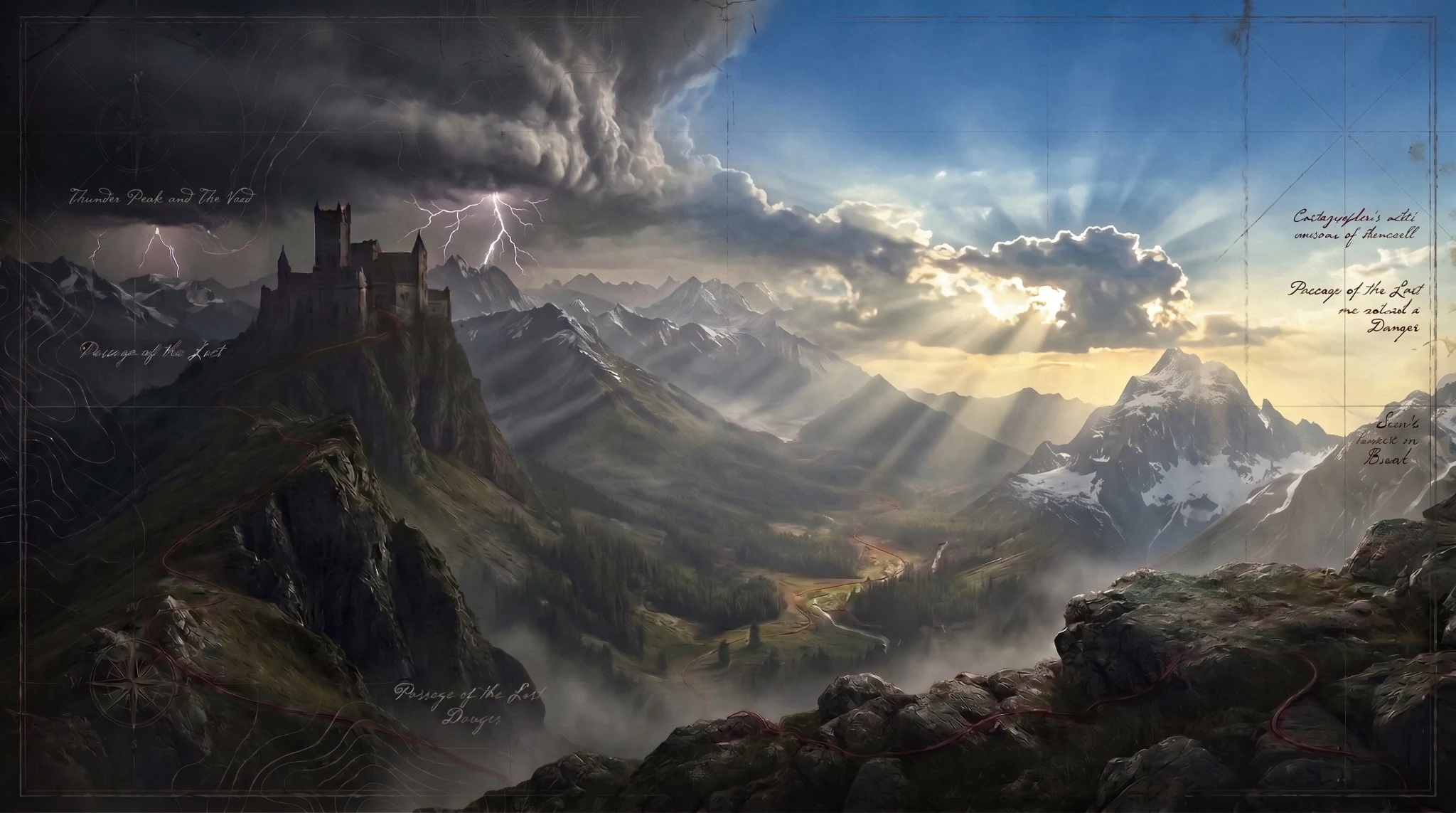
How to Explain
Yourself to Wolves
The wolves were never listening to your explanations. The map begins the moment you stop defending your right to stand upon the road.
I did not know I was making a map while I was living any of this.
I thought I was trying to understand people. I thought I was trying to become easier to understand myself. For a long time, that seemed like a reasonable way to live, so I paid attention. I learned the weather in rooms. I learned how quickly a face could change and how much could happen in the space between a question and an answer.
Somewhere along the road, accountability became suspicion of myself. Understanding became agreeing. Empathy became carrying. I got so used to looking for my part in everything that eventually I could find one almost anywhere.
By then I had collected a lot of scraps. Roads I had walked more than once. Directions written in other people’s handwriting. Versions of myself I had left behind because someone had convinced me they were too loud, too difficult, too sensitive, too much, not enough.
The territory exists whether you acknowledge it or not. The only question is whether you keep walking the perimeter in the dark, or start surveying the ground under your feet.
Three Ways into the Landscape
Each portal offers a distinct lens on the allegorical territory. Enter sequentially, explore nonlinearly, or read the writings underneath.
The Journey
Follow the route.
The curated cinematic passage through the eight canonical territories in manuscript sequence—from the misty basin of Please Understand Me to the open horizon of Through.
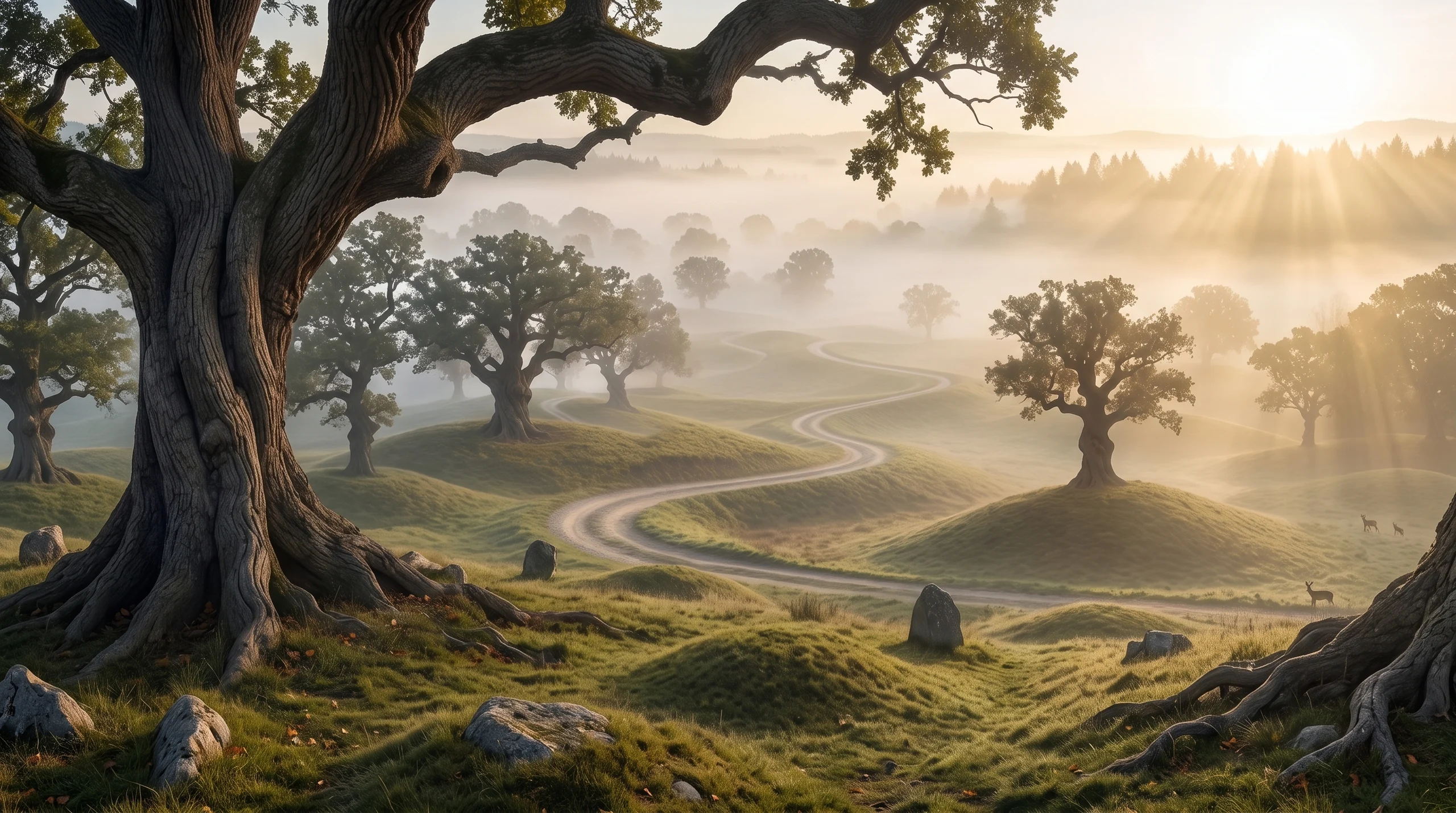
The Story Atlas
Survey the territory.
The complete cartographic reference of manuscript jurisdictions and expanded outer territories. Inspect folios, marginalia, local weather, and connecting routes nonlinearly.
Essays
Leave the mapped road.
Standalone writings and reflections exploring the inherited directions, relational compliance, and unexamined habits beneath the surface.
Some places change the weather.
The landscape is not a backdrop. It is an active participant in what the traveler must unlearn.
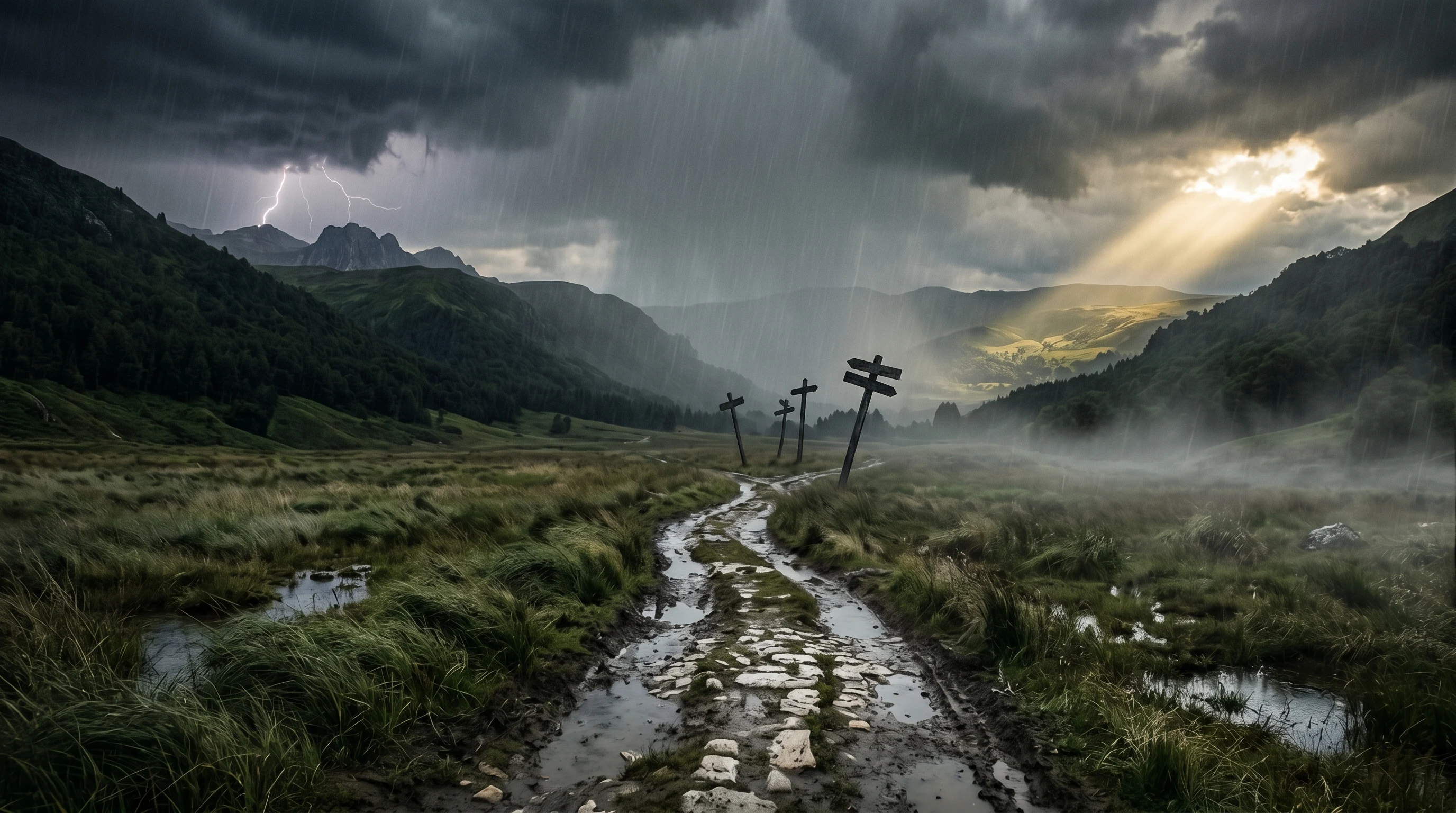
The Valley of Please Understand Me
A low basin where the air is thick with explanations that were never asked for.

The Forest of Other People’s Weather
You were drenched because someone three miles up the road had clenched their jaw.
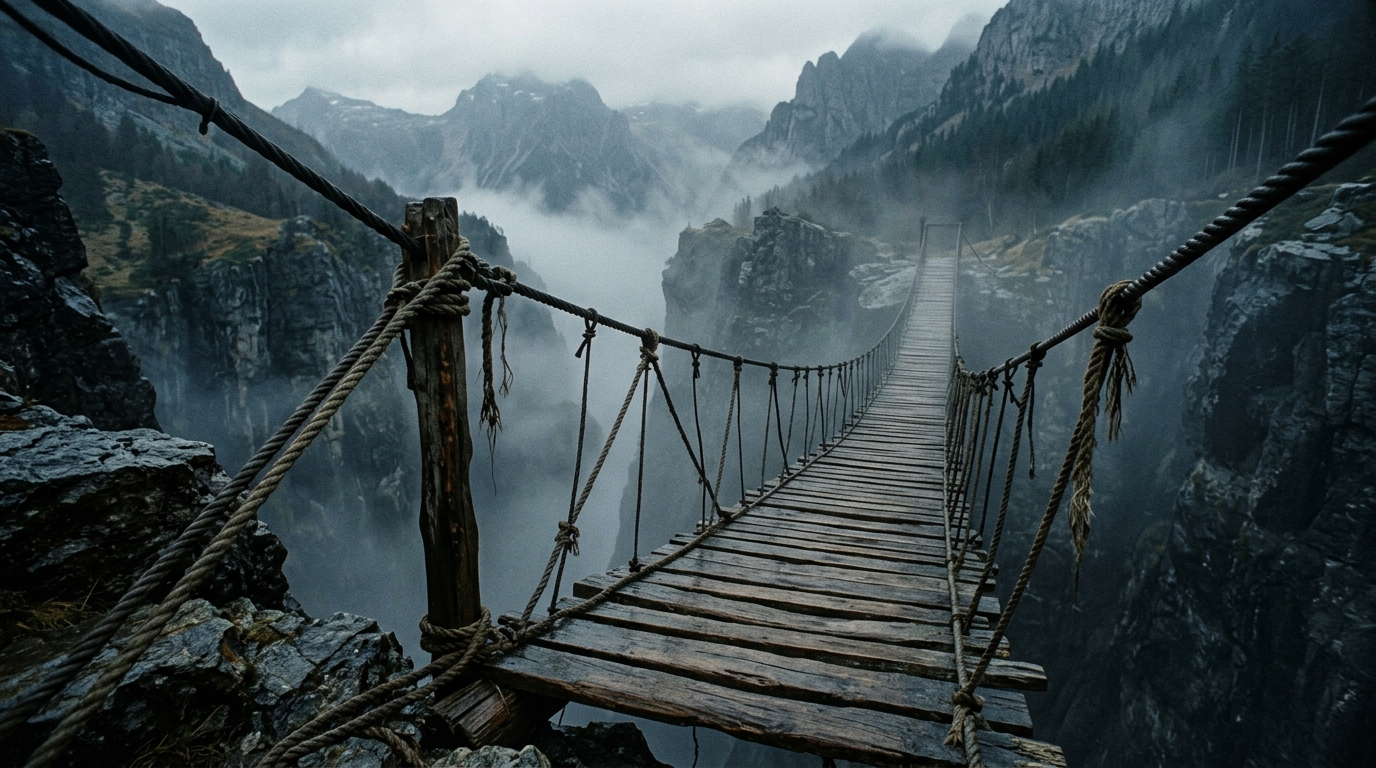
The Bridge of If Only I Were Easier
A crossing where you had to leave your luggage behind. Then your shoes. Then your tongue.
Dear Red
An advice column for difficult maps.
Bring me the place where your map stops making sense.
Eventually, the map stops being about where you've been.
It becomes a way of determining where you are.
How to Explain Yourself to Wolves is the record of an unlearning. Self-Cartography is the reader-owned instrument that grew out of that terrain—a structured, practical system for surveying your own relational boundaries, inherited directions, and unmapped ground.
01 · Inherited Directions
Identifying whose handwriting is on your internal map and which routes you walk out of habit rather than choice.
02 · The Cost of Monitoring
Auditing the invisible energy spent tracking another person's weather and carrying shelter for storms in someone else's chest.
03 · The Uncalibrated Edge
Learning to walk past the perimeter fence without needing the wolves to confirm your right to stand upon the road.
The Book & Field Companion
How to Explain Yourself to Wolves
A Memoir Rendered Through Allegory · By Jayme Volstad
Translating the invisible architecture of relational vigilance, compliance, and self-erasure into an allegorical geography.
The Field Journal
A Physical Companion for Personal Cartography
A spiral-bound working ledger containing field exercises, coordinate grids, and diagnostic prompts to accompany the Journey.